

By Core Brake Parts Tech Team — Circleville, OH warehouse
Short answer: A seized brake bleeder screw usually frees with penetrating oil, a 6-point flare wrench, and controlled heat. Bleeders are typically 8-10mm hex; if it snaps flush or strips, replacing the caliper is often cheaper and safer than drilling it out. This guide walks through the exact diagnostic steps, replacement thresholds, product comparisons, and cost breakdown so you can decide with confidence whether to DIY or take it to a shop.
Direct experience note: we ship these parts daily from our Circleville, OH warehouse to customers across the country. The picks in this guide reflect what fits, what lasts, and what our repeat-buyer mechanics come back for.
Need the part? Shop Brake Pads & Kits at Core Brake Parts
Filter by your exact year, make, and model — every part ships from our Circleville, OH warehouse, free over $75.
Shop Brake Pads & Kits →What to Know About Stuck Brake Bleeder Screw
Understanding stuck brake bleeder screw matters because it directly affects stopping distance, brake pedal feel, and how often you replace consumables. Getting it right the first time saves both money and follow-up shop visits.
- Bleeder screw hex sizes are commonly 8mm, 10mm, or 11mm; verify yours before fitting a wrench.
- Seizing comes from corrosion between the steel screw and the caliper bore, worsened by trapped moisture.
- Always use a 6-point flare, line, or bleeder wrench; a 12-point or open-end wrench rounds the head.
- Penetrating oil such as PB B'laster or Kroil needs 20-30 minutes minimum, longer for heavy rust.
- A bleeder snapped flush is rarely worth extracting; a new caliper often costs less than shop drill-out time.
- Bleeder torque is low, roughly 5-12 ft-lb by size; overtightening is a common cause of future seizing.
Spec Chart by Vehicle Class
| Vehicle class | Pad thickness | Rotor thickness |
|---|---|---|
| Compact sedan | 10-12 mm new / 3 mm replace | 22-25 mm rotor |
| Mid-size sedan | 10-12 mm new / 3 mm replace | 25-28 mm rotor |
| Full-size truck front | 11-14 mm new / 3 mm replace | 28-32 mm rotor |
| SUV rear (many) | 9-11 mm new / 3 mm replace | 10-14 mm rotor |
How to Diagnose or Replace
- Spray penetrating oil around the bleeder base and let it soak at least 20 minutes.
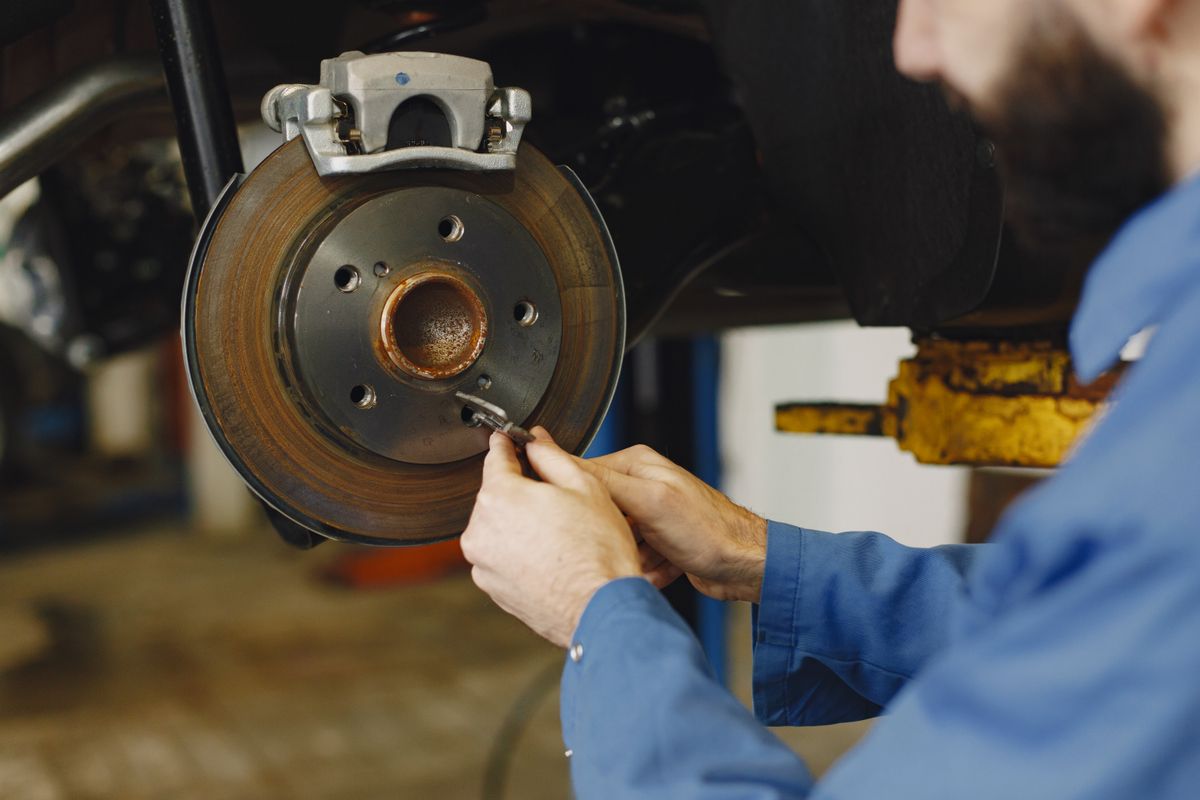
- Slip a clear hose over the bleeder to catch fluid and see cracking rust.
- Fit a 6-point flare or bleeder wrench squarely on the hex to avoid rounding.
- Apply steady counterclockwise pressure; if it resists, stop and add more penetrant.
- Heat the caliper boss briefly with a torch, keeping flame away from rubber and fluid.
- Work the screw back and forth in small arcs to break the corrosion bond.
- If it snaps or strips, replace the caliper rather than risk cross-threading the bore.
Once diagnosis is complete, order the exact replacement parts for your vehicle - fitment matters. Related stuck brake bleeder screw products are listed in the next section.
Recommended Parts and Where to Buy
Every product below is in stock at our Circleville, OH warehouse and ships same-day when ordered before 2 PM Eastern. Free shipping on orders over $75.
If your exact vehicle is not listed, use the site search or filter the full brake parts collection by year and make.
Cost Breakdown - DIY vs Shop
| Job | DIY parts only | Shop parts and labor |
|---|---|---|
| Penetrating oil (PB B'laster/Kroil) | $6-$14 | One can handles many jobs |
| Bleeder or flare wrench set | $10-$30 | 6-point grip prevents rounding |
| Bleeder extractor socket set | $15-$40 | Bites rounded or snapped heads |
| Replacement loaded caliper | $50-$200 | Reman common; premium costs more |
DIY savings scale with vehicle size and job complexity. A full-size truck brake job saves $450-700 in labor. For most passenger cars, plan on 90-120 minutes per axle for pads only, 2-3 hours for pads plus rotors.
Install Tips - Where Most DIYers Go Wrong
- Apply a thin film of anti-seize to new bleeder threads, keeping it off the sealing seat and passage.
- Torque the bleeder gently, roughly 5-12 ft-lb by size; snug and leak-free beats over-tight.
- Cap the bleeder with its rubber dust cover to keep moisture and grit out of the passage.
Frequently Asked Questions
What's the short answer on stuck brake bleeder screw?
A seized brake bleeder screw usually frees with penetrating oil, a 6-point flare wrench, and controlled heat. Bleeders are typically 8-10mm hex; if it snaps flush or strips, replacing the caliper is often cheaper and safer than drilling it out.
How much does it cost to fix?
It depends on your vehicle and how much you replace. For example, penetrating oil (pb b'laster/kroil) runs about $6-$14 in parts for a DIY job, or One can handles many jobs at a shop with labor included. The full cost breakdown is in the table above.
What are the warning signs?
Common warning signs include bleeder head rounds off when turned (wrong wrench or heavy corrosion); and screw will not budge under wrench (rust seizing threads in the caliper bore). If you notice these, inspect the brakes promptly.
Can I do this job myself?
Many DIYers can with basic tools. The first steps are: Spray penetrating oil around the bleeder base and let it soak at least 20 minutes; Slip a clear hose over the bleeder to catch fluid and see cracking rust; Fit a 6-point flare or bleeder wrench squarely on the hex to avoid rounding. The complete step-by-step is above.
Key Takeaways
- A seized brake bleeder screw usually frees with penetrating oil, a 6-point flare wrench, and controlled heat. Bleeders are typically 8-10mm hex; if it snaps flush or strips, replacing the caliper is often cheaper and safer than drilling it out.
- Measure friction material and rotor thickness at every tire rotation - catches wear before it becomes damage.
- Replace pads at 3 mm; below 2 mm is unsafe.
- Loaded calipers (with brackets, pads, and hoses) save 1-1.5 hours of labor per side over bare calipers.
- Bed new pads properly with 8-10 medium stops from 40 to 10 mph.
- Free shipping on orders over $75; same-day shipping on in-stock orders before 2 PM Eastern.
0 comments