

By Core Brake Parts Tech Team — Circleville, OH warehouse
Short answer: Brake squeal comes from worn wear-indicator tabs, glazed pad or rotor surfaces, dust buildup, or overnight moisture. Replace pads worn under 3mm, deglaze or resurface rotors, grease contact points, and bed-in new pads to silence most squeals. This guide walks through the exact diagnostic steps, replacement thresholds, product comparisons, and cost breakdown so you can decide with confidence whether to DIY or take it to a shop.
Direct experience note: we ship these parts daily from our Circleville, OH warehouse to customers across the country. The picks in this guide reflect what fits, what lasts, and what our repeat-buyer mechanics come back for.
Need the part? Shop Brake Pads & Kits at Core Brake Parts
Filter by your exact year, make, and model — every part ships from our Circleville, OH warehouse, free over $75.
Shop Brake Pads & Kits →What to Know About Brakes Squealing
Understanding brakes squealing matters because it directly affects stopping distance, brake pedal feel, and how often you replace consumables. Getting it right the first time saves both money and follow-up shop visits.
- A single steady high-pitched squeal usually means the pad wear indicator is contacting the rotor.
- Glazing forms when excess heat hardens the pad or rotor into a smooth, glass-like surface.
- Overnight surface rust causes a harmless morning squeal that clears within a few stops.
- Hard semi-metallic pads produce more dust and noise, while ceramic pads run cleaner and quieter.
- Missing shims or dry caliper contact points let pads vibrate and squeal under braking.
- Audible brake squeal typically falls in the 1 to 17 kHz range studied in NVH testing.
Spec Chart by Vehicle Class
| Vehicle class | Pad thickness | Rotor thickness |
|---|---|---|
| Compact sedan | 10-12 mm new / 3 mm replace | 22-25 mm rotor |
| Mid-size sedan | 10-12 mm new / 3 mm replace | 25-28 mm rotor |
| Full-size truck front | 11-14 mm new / 3 mm replace | 28-32 mm rotor |
| SUV rear (many) | 9-11 mm new / 3 mm replace | 10-14 mm rotor |
How to Diagnose or Replace
- Listen and note when the squeal happens: constant, light braking, cold mornings, or hard stops.
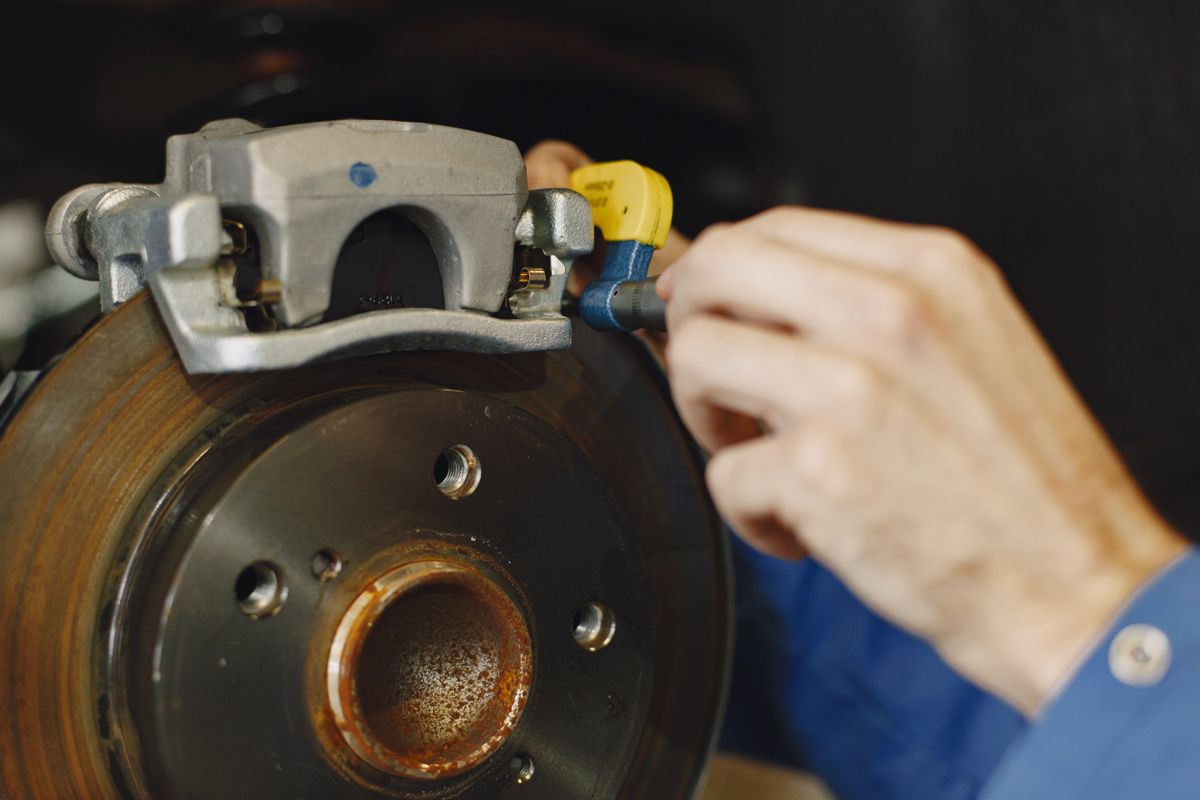
- Remove the wheel and inspect pad thickness against the metal wear-indicator tab.
- Check the rotor surface for a shiny glazed sheen or ridged grooves.
- Replace pads worn below about 3 millimeters and resurface or replace scored rotors.
- Clean caliper contact points and apply brake grease to backing plates, not friction faces.
- Reinstall, then bed-in new pads with several moderate stops from about 35 mph.
- Recheck after a week to confirm the squeal is fully gone.
Once diagnosis is complete, order the exact replacement parts for your vehicle - fitment matters. Related brakes squealing products are listed in the next section.

Recommended Parts and Where to Buy
Every product below is in stock at our Circleville, OH warehouse and ships same-day when ordered before 2 PM Eastern. Free shipping on orders over $75.
If your exact vehicle is not listed, use the site search or filter the full brake parts collection by year and make.
Cost Breakdown - DIY vs Shop
| Job | DIY parts only | Shop parts and labor |
|---|---|---|
| Front brake pads (parts) | $35-$100 per axle | Ceramic costs more, runs quieter |
| Rotor replacement (parts) | $40-$120 each | Replace in pairs per axle |
| Anti-squeal grease and shim kit | $8-$25 | Cheap fix for contact-point noise |
| Shop labor, pads plus rotors | $150-$400 per axle | Varies by vehicle and region |
DIY savings scale with vehicle size and job complexity. A full-size truck brake job saves $450-700 in labor. For most passenger cars, plan on 90-120 minutes per axle for pads only, 2-3 hours for pads plus rotors.
Install Tips - Where Most DIYers Go Wrong
- Clean rotor hubs and caliper slides so new pads seat flat and quiet.
- Apply brake-specific grease to pad backing tabs and caliper contact points, never the friction face.
- Bed-in new pads with moderate stops to lay down an even friction film.
Frequently Asked Questions
What's the short answer on brakes squealing?
Brake squeal comes from worn wear-indicator tabs, glazed pad or rotor surfaces, dust buildup, or overnight moisture. Replace pads worn under 3mm, deglaze or resurface rotors, grease contact points, and bed-in new pads to silence most squeals.
How much does it cost to fix?
It depends on your vehicle and how much you replace. For example, front brake pads (parts) runs about $35-$100 per axle in parts for a DIY job, or Ceramic costs more, runs quieter at a shop with labor included. The full cost breakdown is in the table above.
What are the warning signs?
Common warning signs include constant high-pitched squeal while driving (worn pad wear-indicator tab touching rotor); and squeal only on light braking (glazed, hardened pad or rotor surface). If you notice these, inspect the brakes promptly.
Can I do this job myself?
Many DIYers can with basic tools. The first steps are: Listen and note when the squeal happens: constant, light braking, cold mornings, or hard stops; Remove the wheel and inspect pad thickness against the metal wear-indicator tab; Check the rotor surface for a shiny glazed sheen or ridged grooves. The complete step-by-step is above.
Key Takeaways
- Brake squeal comes from worn wear-indicator tabs, glazed pad or rotor surfaces, dust buildup, or overnight moisture. Replace pads worn under 3mm, deglaze or resurface rotors, grease contact points, and bed-in new pads to silence most squeals.
- Measure friction material and rotor thickness at every tire rotation - catches wear before it becomes damage.
- Replace pads at 3 mm; below 2 mm is unsafe.
- Loaded calipers (with brackets, pads, and hoses) save 1-1.5 hours of labor per side over bare calipers.
- Bed new pads properly with 8-10 medium stops from 40 to 10 mph.
- Free shipping on orders over $75; same-day shipping on in-stock orders before 2 PM Eastern.
0 comments